
Educating for Uncertainty: Lessons From a Liberal Arts University in Eastern Europe
In an era of geopolitical uncertainty, universities must prepare students for far more than their first job
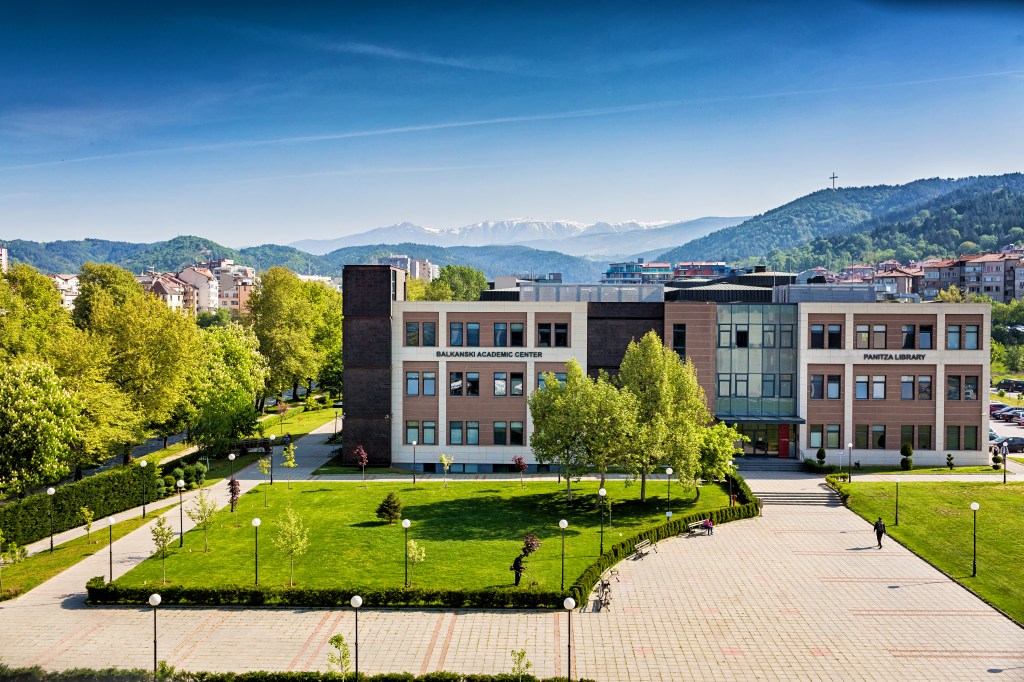
Written by the American University in Bulgaria
What if universities were preparing students for the wrong future? As geopolitical tensions rise and artificial intelligence transforms economies at unprecedented speed, traditional models of higher education are struggling to keep pace. The question is no longer whether students will need to adapt, but how quickly, and how well.
In this environment, the role of universities becomes strategic. Nations are competing not only for markets and resources, but for talent, cognitive capacity, and the ability to adapt to fast-moving technological and political shake-downs.
OECD’s recent report “Understanding Skill Gaps in Firms” (2024) cites that among the companies surveyed, many report significant skill gaps, particularly in technical skills, problem-solving, and teamwork. Likewise, UNESCO warns that digital inequalities and uneven AI literacy risk deepening global divides in opportunity, participation, and governance.
That’s where we are at today. We don’t know what political, economic, or technological challenges lie ahead. What we do know is that we need to be prepared to navigate any situation, not just professionally, but personally too. This is the true value of higher education: it strengthens democratic resilience and prepares students for an unpredictable labor market. At a liberal arts institution like the American University in Bulgaria (AUBG), students learn how to adapt, think and learn, and how to chart their own path. They gain the ability to stay firm on the constantly shifting tectonic plates of uncertainty.
The paradox of certainty and uncertainty in the AI era
For all the certainty that AI promises – precision in tasks, flawless archiving, organizing, and faster decision-making – it also introduces new uncertainty. What will the future of work look like? Which professions will be transformed or replaced? And more abstractly, what counts as “thinking” when algorithmic reasoning can now outperform humans in speed and scale?
“AI, in many ways, is a certainty machine that generates greater uncertainty,” said Provost and Interim President at AUBG – Dr. J.D. Mininger. “That’s a kind of strange irony to its function, and our role as educators is to guide students into this dialogue.”
Students and parents feel this tension acutely. In times of economic instability, education is often framed through the narrow lens of return on investment. Research by Mortimer et al. (2014) shows that economic hardship and financial strain can translate into parental behaviors that stress the importance of securing stable, well-paying jobs through education. What this linear thinking omits to see is that a hyper-specialized education may be obsolete just a few years after graduation. According to the World Economic Forum’s Future of Jobs Report 2025, nearly half of workers worldwide will require reskilling within the next three years due to AI-driven transformations.
“Jobs, markets, and even reality are being innovated in front of our eyes, often in very short spans of time,” said Dr. J.D. Mininger. “This uncertainty hints that whatever you have trained for in a university in a narrow way may be inexorably altered just a couple of years later by AI or simply just by the changing nature of societal values and priorities.”
This reality demands a different pedagogical approach that does not shield students from technological change, but equips them to think critically with it, while developing a range of other flexible, adaptive skills.
Beyond job training – education for a volatile world
When universities first emerged, their goal was to broaden understanding of the world, not just to prepare people for a single field. Over the course of the 20th century, education gradually shifted toward specialization to meet the demands of the labor market. But today’s challenges, including climate transitions, technological disruption, demographic shifts, and geopolitical fragmentation, are not discipline-specific. They are interdisciplinary by nature.
Across Europe, Asia, and North America, universities are experimenting with curricular models that combine breadth and depth, integrate theory with application, and emphasize adaptability over narrow technical training. Liberal arts institutions outside the United States, including those in emerging democracies, have become particularly influential in this shift.
The American University in Bulgaria (AUBG) offers a case study of this approach. Situated at a geopolitical crossroads and shaped by the region’s democratic transitions, AUBG uses the liberal arts model to cultivate not only workforce-ready graduates, but globally aware citizens, equipped with a set of tools to tackle the next challenge on the horizon. Its educational philosophy is grounded in interdisciplinary learning, small class sizes, and applied problem-solving. These are attributes that research increasingly links to adaptability and resilience. Without them, we’d become more susceptible to political systems that rely on control over our ideas.
AUBG’s new Sustainability Studies minor illustrates this model in practice. Courses such as “Engaging in Sustainability” require students to apply classroom knowledge to real-life sustainability challenges. Recent cohorts partnered with the municipality of Blagoevgrad and NGOs like Za Zemiata, a Bulgarian environmental organisation working to protect nature, promote zero waste, and climate action through education and advocacy, to research household waste separation systems across Southeastern Europe. Others collaborated with Unboxed, a start-up founded by AUBG alumni, to assess the feasibility of sustainable second-hand clothing workshops.
Professor Daniel Adsett, who helped design the minor, explains: “We wanted the minor to cover not just business, but also political science, history, economics, and literature. The idea is that no matter what career students pursue, they’ll know how to implement sustainability in whatever company they join.”
AUBG’s Computer Science and Information Systems majors offer another illustration of how the liberal arts model prepares students for an AI-mediated future. Courses not only teach technical competence but embed critical reflection on algorithmic bias, data ethics, and AI’s societal implications. Students learn how to build technology, but also how to question it, equipping them to tackle the uncertainty introduced by rapid technological change.
Teaching you how to think
Technological acceleration demands that universities shift focus from imparting and repeating knowledge to cognitive flexibility. AI systems might excel at storing, retrieving, and generating information, so why should humans focus solely on that too? Instead, they need to focus on cultivating the capacities that machines cannot yet replicate reliably. These include contextual reasoning, creativity, ethical judgment, and interpersonal communication. The real question is, what kind of education prepares you not just for your first job, but for your entire life?
These competencies align with what many educators call the “Four Cs”: critical thinking, creativity, collaboration, and communication – skills central to innovative economies and democratic societies. Students don’t need more information crammed into them; they need the ability to know what to do with it. As Thornhill-Miller et al. (2023) argue, these are not “soft” skills but dynamic cognitive abilities essential for navigating complexity.
At institutions like AUBG, these skills are not taught in isolation. They are embedded in interdisciplinary coursework and experiential learning programs. A recent example is AUBG’s Vienna International Summer Program, where students worked with local businesses and non-profit organizations to address real-world challenges, such as the ones faced by refugee communities integrating into Austria. As student Denitsa Jekova described: “Our classroom became the streets of Vienna. Our mission was to help individuals, and even whole communities, integrate into a new country after the unimaginable challenge of fleeing their homes as refugees.”
Another student, Daniela Hristoneva, called it “applied learning in the truest sense – creative, fast-moving, and connected to a real cause.”
Experiences like these show that the goal of the university is to challenge students to learn more about themselves, and to learn how they learn. They strengthen what could be considered a fifth “C”: confidence – the self-knowledge and agency to navigate uncertainty. This echoes the 18th-century German concept of Bildung, a tradition of holistic education that emphasizes the formation of character, self-understanding, and civic responsibility.
Education as a strategic tool for democratic and economic resilience
Globally, higher education has become a front line in the struggle to preserve open societies. Democratic institutions rely on critically informed citizens to counter disinformation and polarization, and universities are uniquely positioned to cultivate this civic resilience.
Initiatives such as AUBG’s Bulgaria International Journalism Fellowship (BIJF) illustrate how universities can strengthen this mission by promoting rigorous, public-minded storytelling that connects academic insight to societal challenges. Alongside this initiative, the Center for Information, Democracy and Citizenship (CIDC) at AUBG plays a vital role in bolstering informed civic participation across the region. By supporting Bulgarian journalists and students in producing evidence-based, regional reporting that strengthen the country’s positioning, BIJF reinforces the very skills, such as critical inquiry, adaptability, and democratic engagement, that higher education seeks to cultivate.
Economically, adaptable graduates form the backbone of innovation-driven growth. Countries that invest in interdisciplinary education, AI literacy, experiential learning, and extra-curricular activities are better equipped to build competitive labor forces, attract global talent, and participate in emerging industries.
Education as lifelong empowerment
Too often, university education is framed narrowly as a pathway to a high-paying job. But the far more consequential question is how education develops the capacity to navigate a lifetime of change.
Empowerment, in this context, does not mean mastering fixed knowledge. It means developing the potential to adapt, question, and create. It means learning how to learn, how to pivot, and how to contribute to communities undergoing transformation.
Dr. J.D. Mininger concluded: “This is the true value of higher education in the age of AI: not certainty, but capability. Not prediction, but preparedness. Not job training, but the lifelong empowerment of individuals who will shape, rather than be shaped by, the world’s next era of change.”
http://aubg.edu/center-for-information-democracy-and-citizenship-cidc/?region=bulgaria
http://aubg.edu/center-for-information-democracy-and-citizenship-cidc/bijf/?region=bulgaria