
Fostering growth through innovation
Consolidated as a leader in advanced manufacturing, medical devices, and digital services, Costa Rica is determined to evolve further, building on its strengths to remain competitive for investment and navigate the challenges of an increasingly complex economy.
Produced by Gate21
Traditionally known for its pristine beaches, lush biodiversity, and agricultural exports, Costa Rica has undergone a profound economic transformation. Today, it stands as an unexpected force in the global knowledge economy—a hub for medical devices, semiconductors, advanced manufacturing, and digital services. This transformation from an agrarian base to a diversified, high-value economy was not accidental but the result of deliberate strategy, combining openness to trade, institutional predictability, and a forward-looking development model that positioned the country among Latin America’s most competitive destinations for foreign investment.
The scale of this shift is remarkable. In the 1980s, exports relied on a handful of agricultural commodities; today, Costa Rica ships more than 4,500 products and services worldwide. Between January and October 2025, goods exports exceeded US$19 billion, marking a 16% year-on-year increase, driven by precision and medical equipment alongside agricultural, food, chemical and pharmaceutical sectors. This evolution has attracted over 400 multinational corporations, creating an ecosystem that thrives on connectivity and innovation. Costa Rica has become a natural bridge between North and South America, leveraging its geographic advantage and cultural proximity to the United States to capitalize on nearshoring trends and the restructuring of global supply chains.
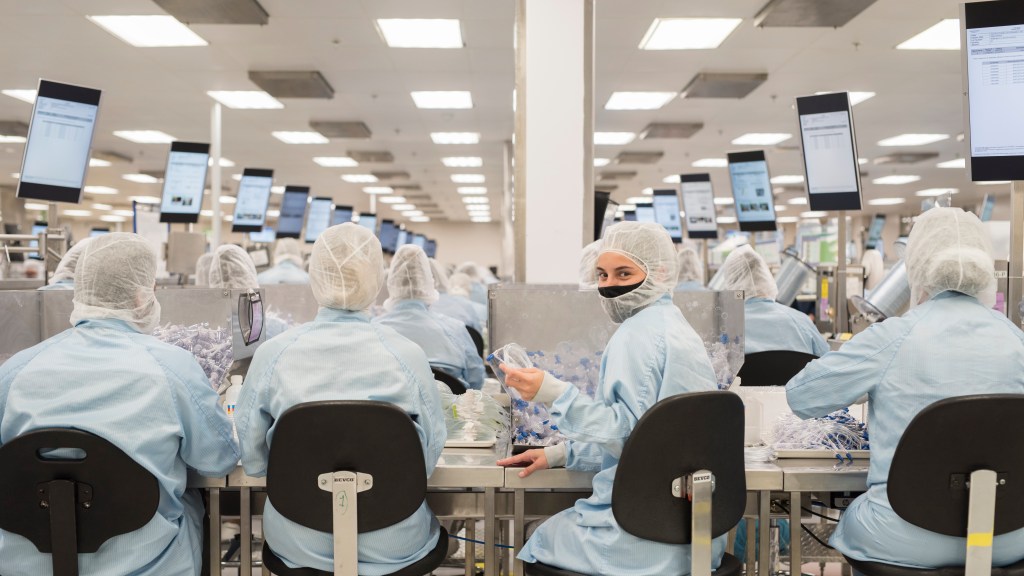
Agriculture remains relevant but increasingly sophisticated, focused on niche markets and value-added processes. Costa Rica continues to lead global exports of pineapples and bananas while maintaining its reputation for premium coffee. Yet the country’s economic engine now runs on sectors that barely existed a generation ago. It is Latin America’s second-largest exporter of medical devices, generating more than US$8.7 billion annually and supporting close to 60,000 direct jobs. Beyond manufacturing, services such as software development, cybersecurity, and financial operations have gained prominence, reinforcing Costa Rica’s role in global value chains.
This success is anchored in a distinctive energy model: around 98% of electricity has come from renewable sources in recent years, a feature that strengthens Costa Rica’s global brand and appeals to companies seeking to decarbonize supply chains. Long before sustainability became a corporate imperative, Costa Rica made it a national priority—an identity that now translates into competitive advantage.
Trade policy has been another cornerstone. Costa Rica enjoys preferential access to markets representing more than 70% of global GDP, thanks to a robust network of agreements. Recent trade-policy milestones include negotiations with Ecuador and Israel, a comprehensive partnership with the United Arab Emirates, progress on the Digital Economy Partnership Agreement (DEPA), leadership in the ACCTS initiative on trade and climate, and the ongoing process to join the Comprehensive and Progressive Agreement for Trans-Pacific Partnership (CPTPP). These alliances open doors to new markets, supply sources, and investment opportunities, reinforcing the nation’s position as a reliable partner in an increasingly fragmented global economy.
Yet challenges loom large. According to UNCTAD, global FDI fell 3% in the first half of 2025, driven by geopolitical uncertainty, trade fragmentation, and competition in industrial policies. Costa Rica was not immune, recording a 7% decline in the same period. Investors now seek ecosystems that offer digital talent, green energy, data security, and regulatory predictability—beyond traditional macroeconomic stability and free zones. For Costa Rica, this means implementing new metrics, incentives, and narratives to remain competitive.
Adding to this complexity is Intel’s recent announcement to relocate its chip assembly operations to Southeast Asia. Rather than weakening Costa Rica’s position, such turning points often ignite a process of renewal—opening space for emerging industries such as AI-driven manufacturing or green-tech components, innovative partnerships, and investment models that align with emerging global priorities.
The stakes are high. International trade accounts for roughly 72% of Costa Rica’s GDP, making the country highly exposed to global disruptions—from armed conflicts to climate shocks and protectionist measures. Yet its track record offers confidence: Costa Rica has repeatedly adapted without abandoning its principles. It has shown that sustainability and competitiveness can coexist, and that even small nations can thrive when they combine vision, openness, and coherence.
In a world defined by volatility and fragmentation, Costa Rica’s challenge is to move faster than the environment changes. It’s an opportunity to consolidate a leadership model that not only attracts investment but inspires others—a reminder that size matters less than strategy when navigating the complexities of the new global order.
A Reliable and Sophisticated Hub for the Global Life Sciences Industry
Costa Rica has solidified its position as one of the most stable, sophisticated, and reliable hubs for the global life sciences industry. This leadership is not the result of accidental growth, but of a long-term strategy that, for more than two decades, has allowed the country to evolve in step with a sector that demands quality, traceability, and a highly technical workforce.
Today, 14 of the world’s top 30 medical device companies operate in Costa Rica. But the true indicator of maturity is not the number of firms, it is the type of operations and sophistication they choose to carry out. Companies have complemented their manufacturing with higher-value activities such as R&D, engineering support, automation, product design, prototyping, and regulatory support. This shift toward advanced processes reflects the ecosystem’s ability to absorb complexity and meet the industry’s increasingly complex requirements.
CINDE, Costa Rica’s private foreign direct investment organization, is not a government agency but an independent, nonprofit, and highly recognized internationally for its technical expertise in attracting and advising multinational companies. Its role has been central to the country’s social and economic development. Far from functioning as a traditional promotional agency, CINDE has acted as a strategic advisor, interpreting global trends, identifying opportunities in emerging technologies, and anticipating where the industry is heading. Its forward-looking approach, which blends data analysis, market intelligence, and continuous advisory with more than 400 multinational firms, has helped guide the transformations needed to keep the country competitive in an increasingly demanding global landscape.
Operational continuity is another essential pillar. The medical device industry values countries and locations where rules do not shift overnight and where technical institutions can support high-value operations. Costa Rica has been able to provide this secure investment climate for life sciences companies: regulatory stability, clear operating frameworks, and an industrial ecosystem advancing toward world-class standards. This is why, even during periods of geopolitical tension and global realignment, companies continue expanding engineering, advanced manufacturing, and regulated service projects in the country.
Talent is, without question, one of Costa Rica’s strongest differentiators. More than 4,500 engineers graduate each year in fields such as advanced manufacturing, biosciences, electronics, and mechatronics. This foundation, strengthened by training programs in applied artificial intelligence, automation, and digital skills led by CINDE, ensures a workforce that keeps pace with the sector’s evolving demands.
The ecosystem has also deepened in scope. More than 95 companies form Costa Rica’s life sciences value chain, including manufacturers, specialized suppliers, laboratories, and engineering service firms. This network has positioned the country as a trusted partner for products and processes that require absolute precision.
Within this context of ongoing evolution, Costa Rica is preparing its participation in MDM West 2026 in California, where CINDE will be showcasing the country’s evolving value proposition to the global industry. Costa Rica’s presence on this key platform sends a clear message: the country is ready to engage with the industry’s future demands.

As Marianela Urgellés, CINDE’s Managing Director, notes: “The trust Costa Rica has built in the life sciences industry is no coincidence. It is the result of talent, sophistication, and technical guidance that understands where the industry is headed. That is our commitment: to prepare for the next frontier.”
Small in size but strong in key capabilities, Costa Rica continues to position itself as a strategic partner for the future of the sector.
 Download the PDF